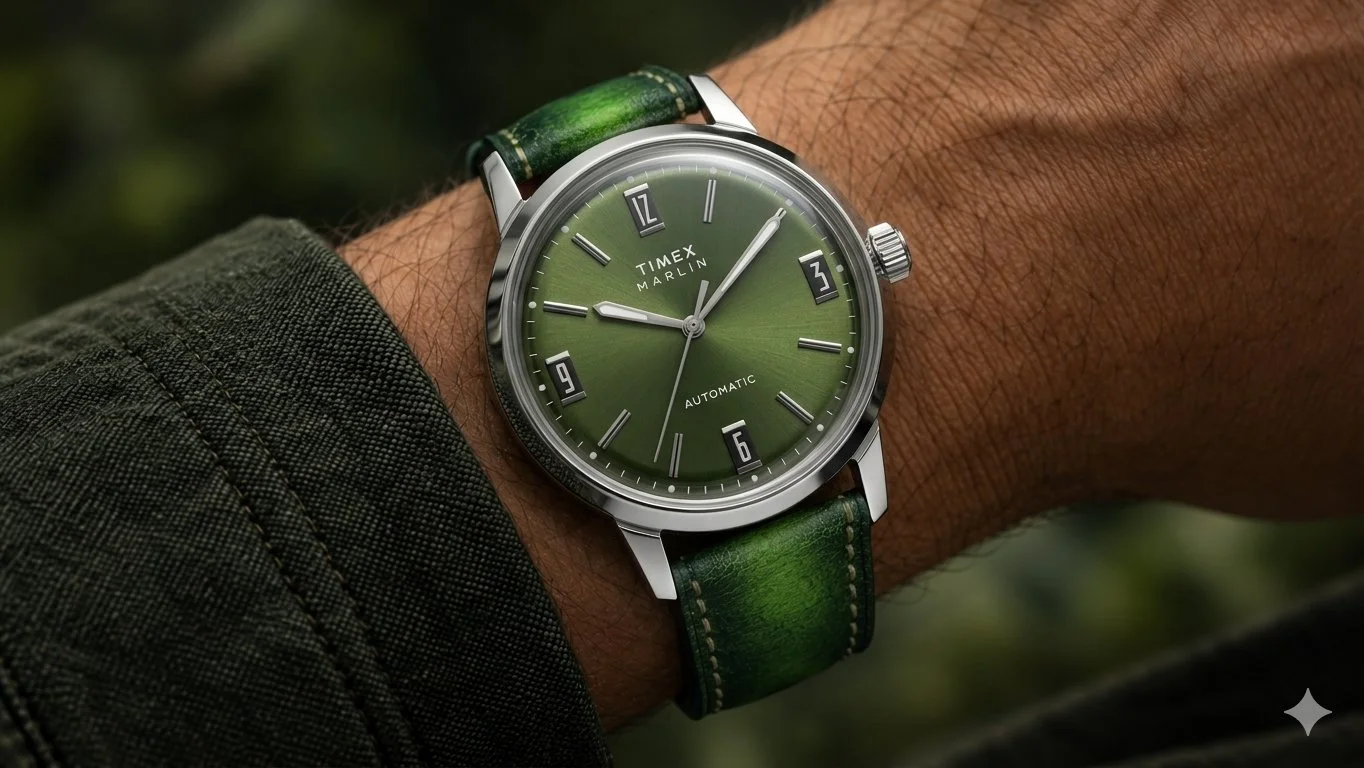
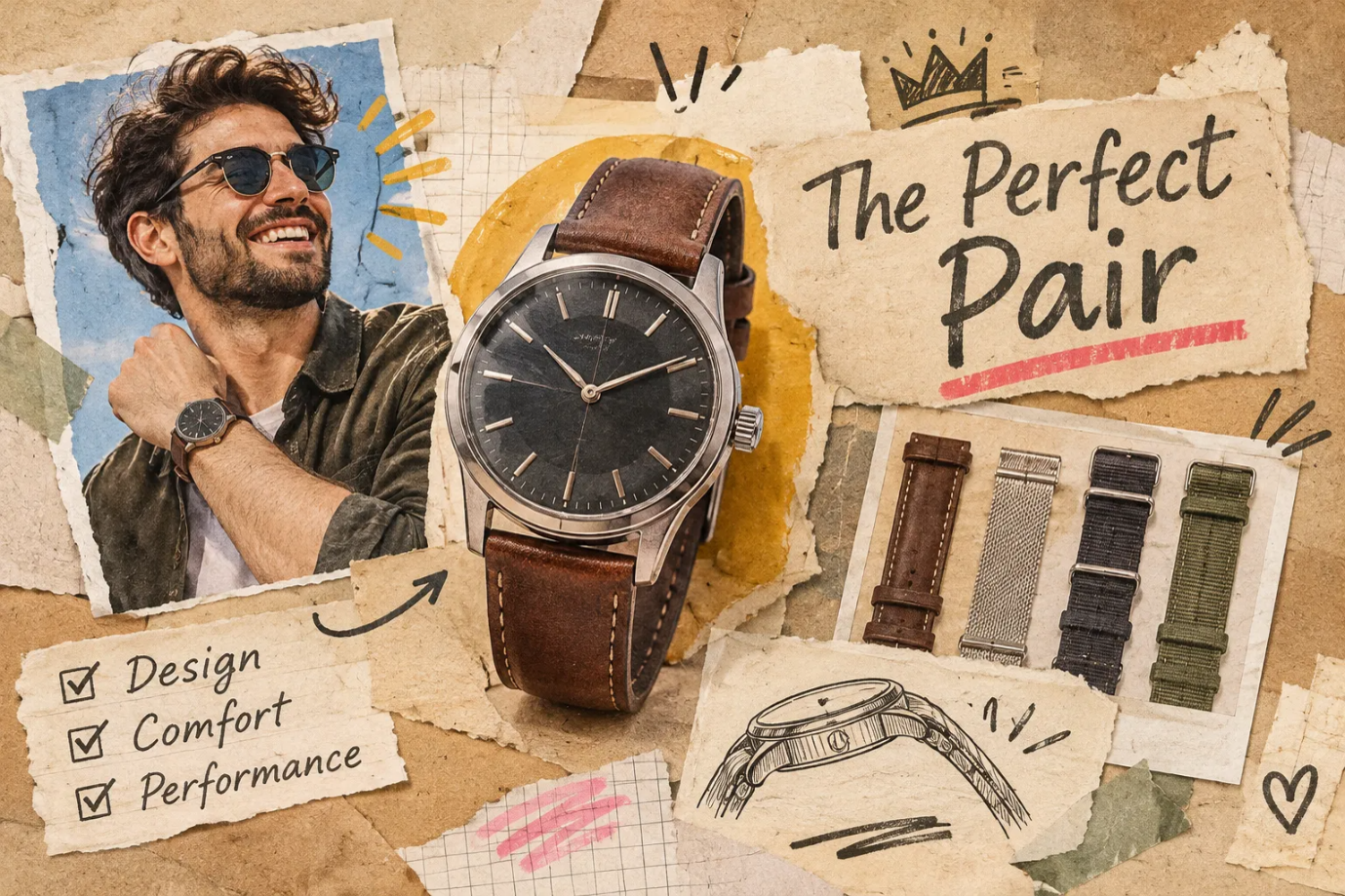
A good watch and strap pairing comes down to three checks. The lug width must match exactly, the material must fit how you wear the watch, and the taper, thickness and finish must suit the case and dial. Brands add a fourth check: a manufacturing partner who delivers a consistent strap in every batch
We are VBL Innovations, a Bengaluru manufacturer with 30 years of experience and over 70 million watch straps delivered worldwide. That experience shapes this guide. It covers sizing, material comparison, pre-order checks, brand positioning and partner selection.
Key takeaways
Lug width first: Measure the gap between the inside lug edges and buy the same width in millimeters.
Material follows routine: Leather and alligator suit dress wear. Rubber, sailcloth and NATO suit water and sport.
Taper sets balance: Match the strap's visual weight to the case.
Check before you buy: Review hardware, fit notes and return terms. Watch and Strap, for one, excludes custom or modified straps from returns, so check each seller's terms.
Consistency matters: For brands, the right partner keeps batch 50,000 consistent with the approved sample within agreed tolerances.
How do you match a watch and strap by case, lugs and dial?
Start with lug width, then wrist length, then proportions. The first two are measurements. The third is judgment.
Start with lug width, measured the right way
Measure the straight gap between the inside edges of the lugs at the spring-bar holes. Do not measure the outside of the case or the lug-to-lug length. Common widths are 18, 20, 21 and 22 mm. Buy the same width. Too narrow leaves a visible gap, and too wide may not seat. Curved lugs add one more check: a flat-ended strap can leave a gap against the case, so confirm the strap's end shape suits your lugs.
Remove the existing strap.
Measure the gap with calipers or a millimeter ruler.
Record the number in millimeters.
Wrist circumference and strap length
Wrap a tape snugly around your wrist where the watch sits. "Short," "regular" and "long" vary by brand, so compare your number against the maker's size chart. As an approximate two-piece guide, about 14 to 16.5 cm (5.5 to 6.5 in) is short, 16.5 to 19.5 cm (6.5 to 7.7 in) is regular, and 19.5 to 22 cm (7.7 to 8.7 in) is long. A 20 mm lug gap and a 17.5 cm wrist means a 20 mm regular strap. Watch strap sizing differs from one maker to the next, so the chart matters more than any rule of thumb.
Case size, taper and dial style
A strap that tapers, say 20 mm at the lugs to 18 mm at the buckle, keeps a slim dress watch light. A straight strap balances a large dive or pilot case. Match character too: dress dials suit refined smooth leather, while field and tool dials suit textured or woven options.
Case thickness and lug curve decide whether a strap sits flush. A heavily padded strap can overwhelm a thin case, and a very thin one can leave a thick case looking top-heavy.
Which strap material fits which watch: leather, alligator, rubber, silicone, fabric or NATO?
Leather and alligator fit dress watches. Rubber and silicone fit water and sport. Fabric and NATO fit field watches and casual wear.
A side-by-side comparison table
Performance varies with construction and lining, so treat the table as a general guide.
| Material | Feel and comfort | Water resistance | Wear resistance | Best for | Upkeep |
|---|---|---|---|---|---|
| Leather | Breathable, molds to wrist | Low | Moderate if kept dry | Dress, daily dry wear | Keep dry, air-dry, rotate |
| Genuine alligator | Supple, refined drape | Low | Moderate, needs care | Formal and luxury | Careful maintenance |
| Rubber | Flexible, can feel warm | Excellent | High | Dive, sport, summer | Rinse |
| Silicone | Very soft, light | Excellent | Moderate | Fitness, casual | Wipe off lint |
| Sailcloth | Light, firmer at first | Good, usually dries quickly | High | Field, casual | Wipe, air-dry |
| NATO and other woven fabric | Light, breathable | Varies: some weaves hold moisture and stay damp | Varies, can fray | Outdoor, travel | Easy to replace |
Luxury: leather and genuine alligator
Leather breathes, softens and develops patina, though sweat and water wear it down over time. Alligator is the luxury choice for formal pieces, with exotic grain and refined drape, but it demands a higher care standard. Among leathers, suede is softer and less hard-wearing than full-grain leather.
Active and everyday: rubber, silicone, fabric and NATO
Rubber and silicone handle water and sport. Woven fabric and sailcloth are strong and low-maintenance, though they start firmer, and some fabrics absorb moisture or fray, so check the weave. NATO-style straps are the field-watch standard: simple, affordable and easy to swap.
Retailers like Watch and Strap sell leather, suede, sailcloth and FKM rubber, so you can compare dressier and more durable options in one place.
What should you check before ordering replacement watch straps?
Flexibility, thickness and hardware
A new leather strap is stiff and softens with wear, so thickness and padding matter on day one. Check buckle size, spring-bar type and whether the hardware feels as good as the strap. Check that the clasp matches the quality of the strap.
Skin comfort, water resistance and long-term durability
Match the material to your real routine: leather for desk and dinner, rubber or sailcloth for swimming and training. Rotate straps, air-dry leather when it gets damp, and never wear it in the shower. A water-resistant strap also doesn't change the watch's own water rating.
How can watch brands pick colors, textures and finishes that strengthen their positioning?
Let the strap carry the brand story
The strap touches the skin, and it shapes how a watch looks in a product photo. Color palette, grain, stitching and edge finishing signal luxury, heritage or sport. Matte rubber with contrast stitching suits a dive line, while hand-finished alligator suits a dress line.
Constructions that change the feel
Padded or flat, stitched or bonded, lined or unlined, perforated or ribbed: each choice shifts comfort, water tolerance and perceived value. Decide these early, because they affect the whole product, not just the look.
Interchangeable strap concepts as a growth lever
Quick-release systems let one watch carry several personalities. They can open up opportunities such as a higher accessory attach rate, seasonal color drops and a reason for customers to return, all without redesigning the watch.
Why does an experienced OEM and aftermarket strap partner matter, and where does VBL Innovations fit?
What a strong partner actually delivers
A strong partner brings product development support, material innovation, customization, testing, consistent batch quality and scalable output. A strap that is perfect in the sample but varies at 50,000 pieces damages the brand. Certified in-house quality testing is one safeguard, alongside agreed specifications and production controls.
How VBL Innovations works with global brands
We run three manufacturing facilities equipped with Swiss and Italian machinery, source leather from European suppliers, and serve 150+ global clients. Our range covers custom leather, genuine alligator, rubber and NATO-style straps.
We manufacture for OEM and after-market applications, and our products suit distributors, importers and wholesalers that need large volumes across materials.
Packaging that finishes the product
We offer custom pouches and cases designed to complement the strap. Premium packaging protects the strap in transit and sets the tone at unboxing. It belongs in the same development brief as the strap.
Questions to ask any manufacturer before signing
How do you keep the sample and the production run consistent?
Can you show testing certificates?
Where do your materials come from?
What are your minimum quantities?
What is your production capacity?
What packaging options do you offer?
The right watch and strap pairing is measured, not guesswork
The logic holds for every watch and strap combination: lug width first, material second, taper and finish third. Measure in millimeters, match the material to the routine, and let proportion settle the rest.
For brands, consistency and testing turn a good design into a reliable product. If you are a brand or distributor planning a custom line, talk to our team at VBL Innovations about strap development, samples and packaging.
Frequently Asked Questions
Can I use a water-resistant strap if my watch isn't water-resistant?
A water-resistant strap does not change your watch's own water rating. We recommend matching the strap material to your routine, but you should still consider the watch's rating.
Why is there a gap between my strap and watch case?
A gap can appear if your strap is too narrow or its flat end doesn't suit curved lugs. We recommend measuring the inside lug width and confirming that the strap's end shape suits your lugs.
How should I care for a leather watch strap?
You should keep your leather strap dry, air-dry it when it gets damp, and rotate it with other straps. We also recommend never wearing it in the shower, because sweat and water wear leather down over time.
Can quick-release straps help a watch brand sell more accessories?
Quick-release straps can create opportunities for a higher accessory attach rate and seasonal color drops. They let you give one watch several personalities without redesigning it.