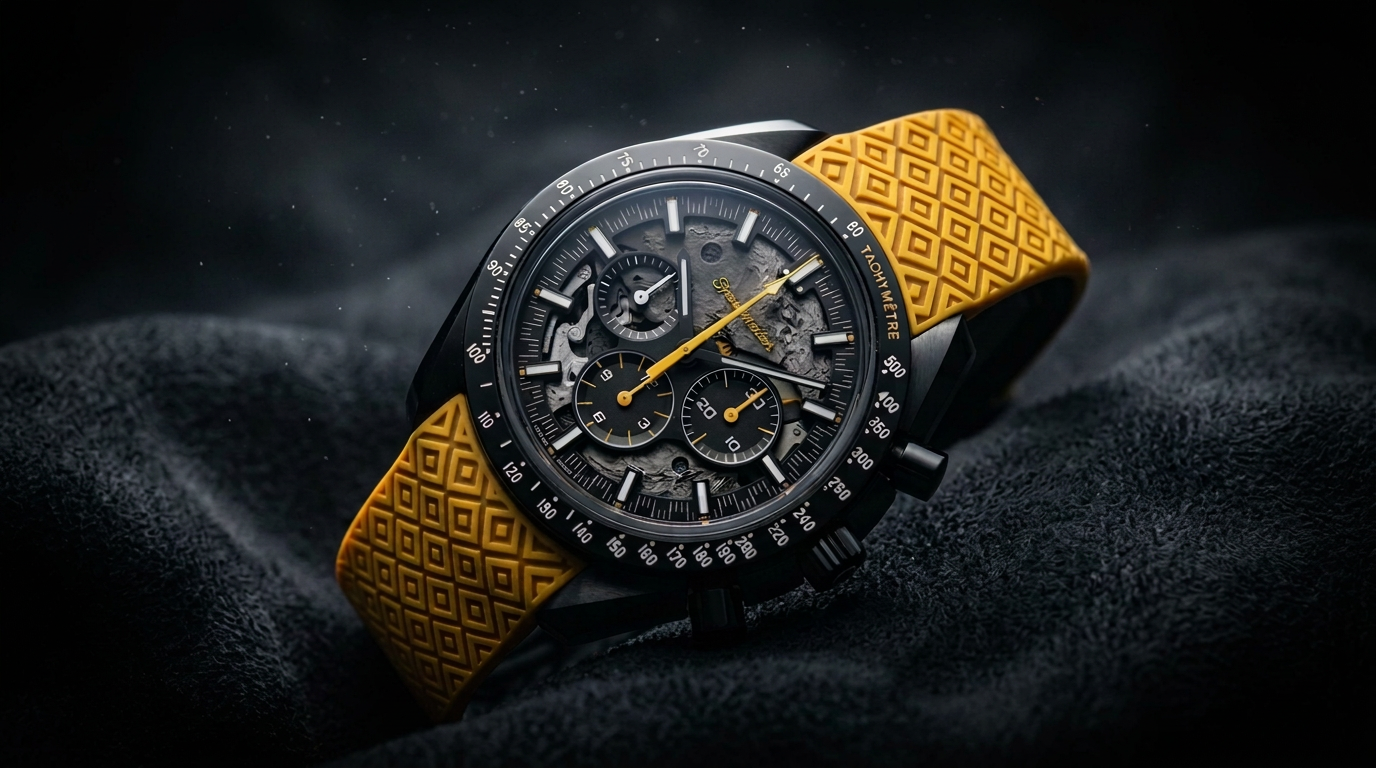
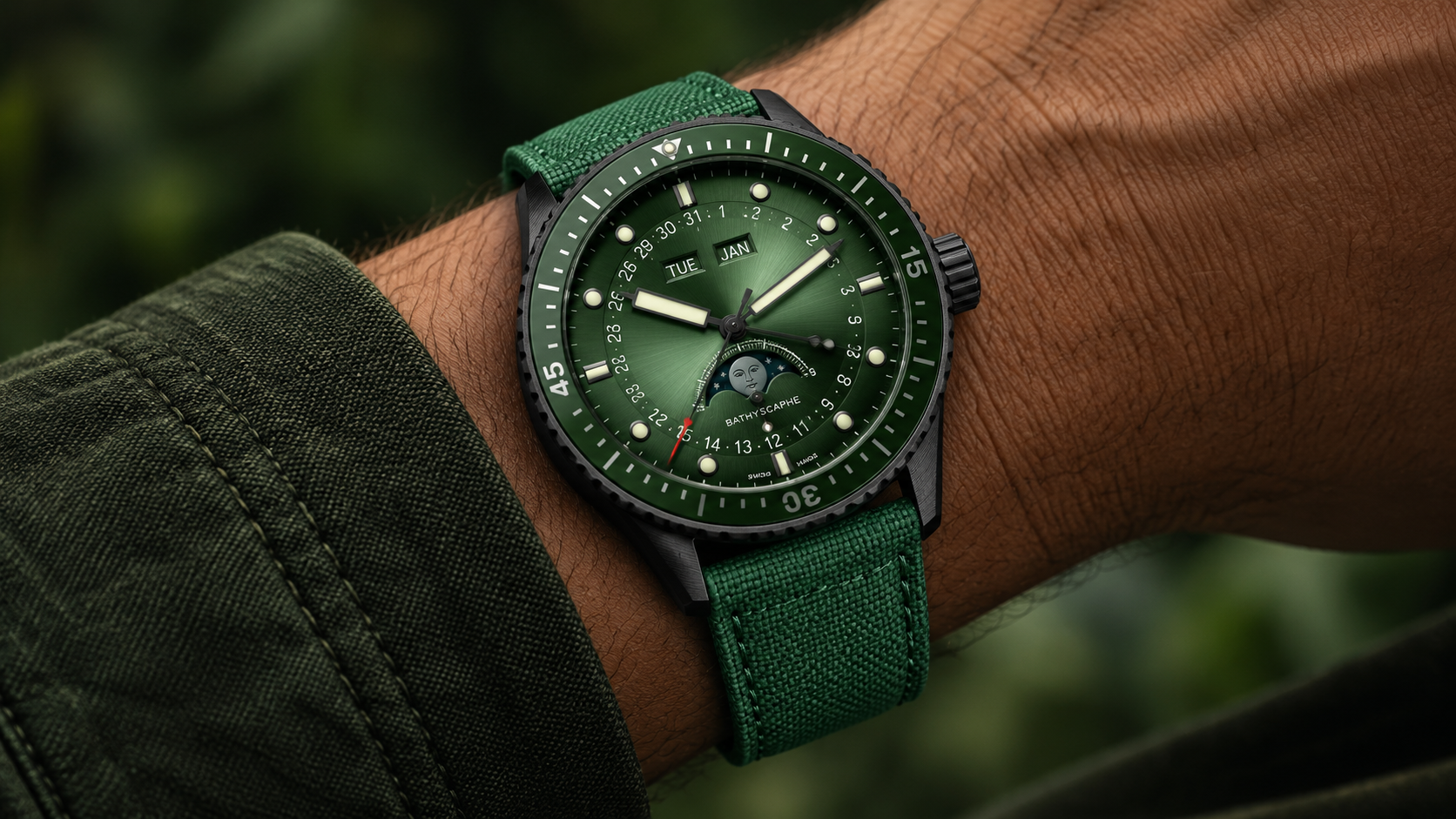
The watch and strap combination is rarely treated as a single design decision. Brands spend years refining movement specifications, case geometry, and dial finishing, then allocate the strap almost as an afterthought.
That sequencing is a problem. The strap is the component a wearer most frequently touches throughout the day, it sits against the skin, flexes with every movement, and signals the brand's quality standards before the dial is even read.
At VBL Innovations, we have spent over 28 years manufacturing watch and strap products for global clients across luxury, mid-range, and sport categories, and the questions brand managers ask us have changed significantly in the last few years. The conversations have moved from "can you match this colour?" to "how do you handle REACH compliance, and what's your position on sustainable material sourcing?" That shift tells us the category has matured. The five areas below reflect where luxury and mid-range watch and strap design and manufacturing actually stand in 2026.
How material choice is redefining the luxury watch and strap category
Material selection is no longer a purely aesthetic call. It positions the brand within a market segment, sets expectations for longevity, and carries compliance obligations that affect which markets you can enter. The material brief and the business brief are now the same document.
Leather and exotic skins: still the benchmark for haute horology
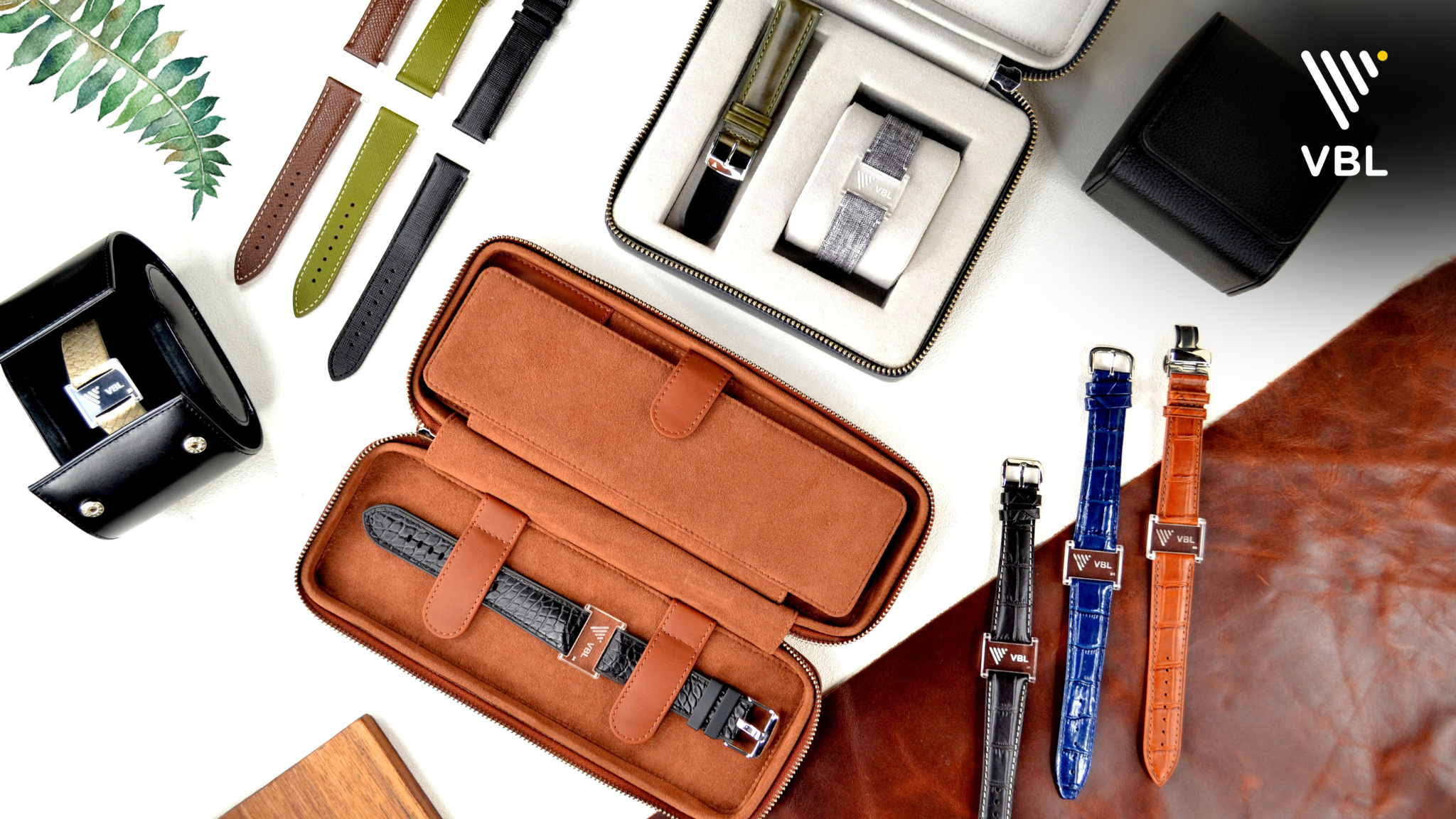
Full-grain, European-tanned leather watch straps remain the default for dress and luxury watches, and the reasons go beyond tradition. European tanneries, particularly in France and Italy, operate with tighter process controls than most commodity sources: consistent colour lots, individual skin traceability, and finishing standards that include testing for perspiration resistance and dye migration. When a brand specifies a European-sourced leather watch strap, they are buying predictability across seasons, not just quality in a single sample run.
Genuine alligator sits above this tier entirely. The material requires expert cutting to manage scale symmetry, precise skiving to achieve consistent thickness, and a longer production cycle. The cost is justified by market demand in haute horology, where the strap is expected to match the movement in prestige and craftsmanship. Brands sourcing exotic leather watch straps at this level should confirm that their OEM partner holds the relevant skin traceability documentation, since provenance audits are increasingly common at the luxury retail tier.
Rubber, NATO, and hybrid materials: what the sport-luxury segment is asking for
The sport-luxury segment, which bridges formal aesthetics with active-wear durability, has made rubber and NATO-style straps standard expectations rather than optional variants. Rubber requires a different production approach: material like FKM, consistent shore hardness, and surface finishing that reads as premium rather than sporting-generic. NATO-style straps, nylon-woven and hardware-fastened, demand attention to thread tensile strength, buckle pull-force, and hardware plating durability.
Some OEM partners offer multi-material capabilities across leather, rubber, and NATO watch bands from a single facility. Where this is available, it is worth considering: brand ranges increasingly include leather, rubber, and NATO variants within the same collection, and co-ordinating that production through one supplier reduces the risk of consistency gaps appearing across materials. Managing multiple separate suppliers for the same collection introduces parallel lead times and specification mismatches that are difficult to catch before retail.
Watch and strap manufacturing precision: what actually determines quality at scale
Two factories can work from identical leather hides and produce noticeably different straps. The variable is not intent; it is tooling precision and process discipline. Brand managers auditing a new supplier should focus on what the factory runs, not just what it claims.
Machinery and tooling: why the equipment matters more than the factory location
High-specification machinery, including Swiss and Italian equipment widely used in the industry, sets a measurable standard in stitch consistency, edge finishing, and strap profiling. Stitch spacing that varies by even a fraction of a millimetre across a production run reads as inconsistency under close inspection. It is the kind of detail that returns from retail with a quality complaint. Edge finishing, whether edge-painted, bevelled, or folded, requires tooling that maintains pressure and angle uniformly, not a hand-finishing step that varies with each operator. The factory's address is far less relevant than the specification of its equipment and the maintenance schedule it keeps.
In-house testing and what certified quality control actually covers
The testing steps that matter for luxury watch and strap procurement are tensile strength, sweat and moisture resistance, buckle pull-force, and dimensional consistency across batch samples. Brands should ask specifically for certified in-house testing documentation rather than relying on third-party batch sampling alone. Third-party sampling tests a subset of production; in-house testing, when properly documented, covers every production lot against defined parameters, an approach aligned with quality management principles and increasingly expected at the luxury tier.
A supplier who relies on external sampling transfers the risk to the brand. When a strap fails at retail, the brand absorbs the perception damage, not the manufacturer.
How VBL Tests Leather Straps for Durability: Behind the Factory — VBL Innovations
Watch and strap customisation and packaging: where brand identity meets production reality
Customisation is now a baseline expectation in premium OEM programmes. The question is not whether a manufacturer can customise, but how clearly they can communicate what is achievable, at what cost, and within what timeline.
Design iteration cycles and what prototyping timelines look like
A typical sample-to-production journey runs as follows: the brand submits an initial brief covering material, width, taper, stitching pattern, edge finish, buckle specification, and logo placement. The manufacturer proposes material options and confirms feasibility. First samples are produced within approximately ten to fifteen business days for standard leather watch straps, or up to three weeks for exotic materials.
Revision rounds follow, covering stitching thread colour, embossing depth, edge paint matching, and buckle hardware finish. Final approval precedes bulk production, which runs fifteen to thirty-five days for standard leather and up to six weeks for more complex or exotic specifications. Compressed timelines increase the probability of specification error. Brand managers who build the sample cycle into their collection calendar avoid the revision-under-pressure problem entirely.
Custom packaging as a brand extension, not an afterthought
Pouches, strap rolls, and branded cases are increasingly ordered alongside watch and strap production rather than separately sourced. The practical reason is straightforward: co-ordinating packaging and strap production through the same OEM partner removes the logistics complexity of two parallel supply chains and helps ensure material consistency between the strap and its presentation. A leather strap paired with a pouch in a mismatched grain or colour reading undermines the premium positioning the strap was designed to carry. When packaging is a separate brief to a separate supplier, that mismatch is almost inevitable without very precise specification control.
Cost-quality trade-offs every brand manager should plan for
Strap procurement decisions made primarily on unit cost carry well-documented risks. Brands often report higher return rates, brand perception damage, and re-sourcing costs that collectively exceed the original savings. The cost-quality conversation deserves a clearer framework.
Where European material sourcing justifies the premium
European leather and material standards deliver specific, verifiable attributes: consistent grain selection across large orders, reliable dye lots that match across seasons, traceable supply chains that satisfy luxury-tier audit requirements, and REACH compliance for EU market entry. Sourcing these materials through an Indian OEM still delivers a meaningful cost advantage over European manufacturing, because labour costs and overheads in India are substantially lower even when material input costs are equivalent. The result is European material quality produced at Indian manufacturing economics, the cost-quality position most global luxury brands are actively looking for.
How volume, lead time, and specification complexity affect unit cost
The main cost variables in watch and strap OEM production are MOQ thresholds, order planning seasonality, stitching and embossing complexity, number of SKUs in the range, and hardware specification. Standard watch strap sizes, 18mm, 20mm, and 22mm, are typically the most cost-efficient to produce at scale, while bespoke widths and tapers introduce additional tooling costs. Higher SKU counts within a single order increase setup time and tooling changeovers, which is reflected in unit cost.
Reducing specification to lower unit price, for instance, simplifying edge finishing or switching to a lower-grade lining, produces savings that are visible in the purchase order and invisible in the quality test, but very visible at retail and in warranty claims. In practice, the margin gain from specification reduction tends to be smaller than brand managers anticipate; the quality cost tends to be larger.
What a reliable OEM manufacturing partner actually looks like
The criteria for a credible luxury strap OEM partner are not complicated, but they are specific. Each one is verifiable during a facility visit; none of them should be accepted on the basis of a catalogue or a sales conversation alone.
Five criteria worth auditing before you commit to a supplier
The criteria that consistently matter for luxury and mid-range brand procurement are:
Production scale and annual capacity:does the facility have the throughput to absorb your volume without disrupting other clients' orders?
Machinery and tooling quality:are the machines high-specification, Swiss or Italian standard, and what is the maintenance and calibration schedule?
Material sourcing standards:can the supplier demonstrate European leather sourcing with traceable documentation, not just a verbal claim?
Certified in-house testing:does the facility run documented in-house quality testing covering tensile strength, sweat resistance, and dimensional consistency?
Track record with comparable brand profiles:has the supplier delivered watch and strap production for global luxury or mid-range brands at scale, and can they evidence it?
Why a Bengaluru-based manufacturer serves global luxury brands effectively
VBL Innovations operates manufacturing facilities in Bengaluru, equipped with high-specification Swiss and Italian machinery, sourcing materials from European suppliers, and maintaining certified in-house quality testing across all production. Bengaluru's position as a manufacturing base combines skilled technical labour, established logistics infrastructure for global shipments, and the cost advantage that makes India-based OEM production genuinely competitive against European alternatives.
India has moved well past the point where cost-efficiency came with a quality compromise. The brands we work with demand European material standards and Swiss machinery precision, from the leather watch strap through to NATO and rubber variants, and that is what this facility is built to deliver. If you are briefing a new strap range or re-evaluating your current supplier, the criteria above are a practical starting point. Contact VBL Innovations for watch and strap samples or OEM quotes tailored to your collection brief.
The strap is the product
The watch and strap pairing is not a component decision and an accessory decision; it is one decision with two parts that must be made together. Every material choice, manufacturing standard, tooling specification, and supplier audit criterion covered in this article connects directly to how the finished product is perceived on the wrist, in the retail environment, and across the brand's reputation over time.
The brands that get this right treat the strap as seriously as the movement. The ones that don't eventually find out why they should have.
If you are planning a new watch and strap range, reassessing your OEM partnership, or looking for a replacement watch strap manufacturer who can handle leather, exotic skins, rubber, and NATO production from a single facility with certified quality testing, get in touch with the team at VBL Innovations to discuss your brief or request a sample run.